
EDAG India
What EDAG asked for.
EDAG India is the Indian arm of EDAG Group — a global engineering services firm operating in the automotive segment, headquartered in Wiesbaden, Germany. The Indian office handles vehicle development engineering / specific service line.
The brief was specific: a corporate R&D office in Ahmedabad that would host visiting senior leadership from Germany, and support the daily R&D rhythms of the ~80-person / specific headcount local team.
Constraints were honest. Specific constraints — timeline, budget tier, building shell limitations. The space wasn’t a blank canvas — it carried inherited columns and structural grids that had to be worked with, not against.
What we found, when we looked carefully.
EDAG’s Indian office serves two distinct visitor patterns — daily local team operations, and periodic senior visits from Germany. The brief described one office; the reality required one space that could shift register between everyday R&D work and high-stakes German leadership presence without rebuilding for each visit.
EDAG operates in a culture where technical precision matters more than corporate polish. The first reference image from the German parent’s offices was a workshop / prototype room / technical drawing area — not a marble lobby. The aesthetic target was quiet engineering competence, not flagship grandeur.
The Pune building shell came with specific site constraint — column grid, ceiling height, structural elements. Rather than fight the constraint, the Decode reading identified it as the spatial logic the design should follow — letting the building’s bones guide the floor plate rather than masking them with applied finish.
Five decisions that shaped the project.
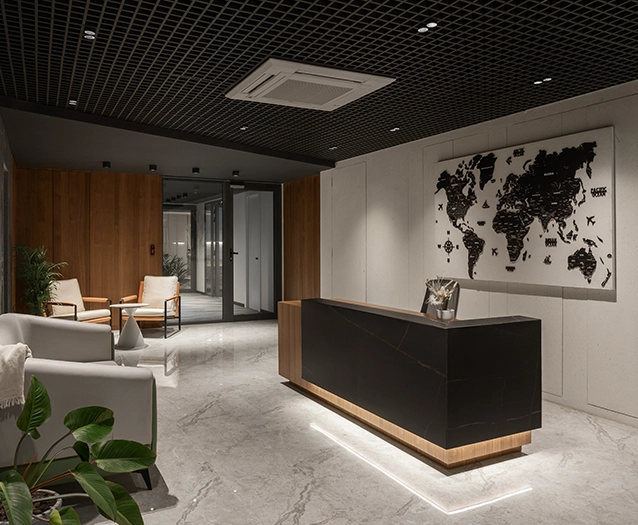
A reception that absorbs the German register without performing it.
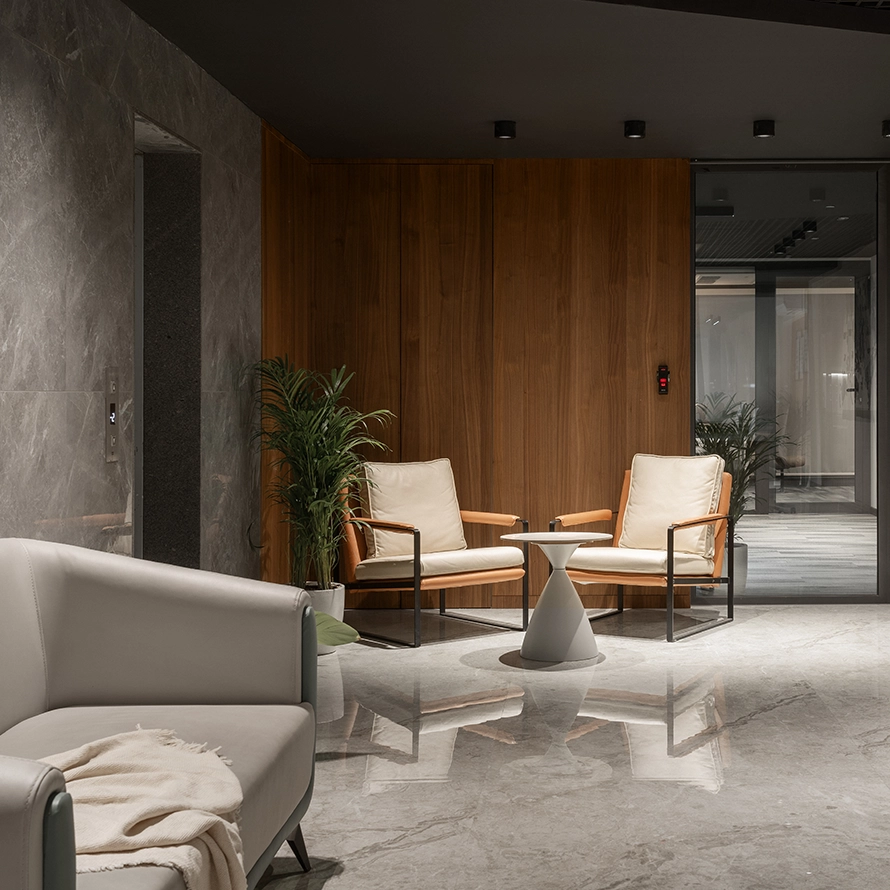
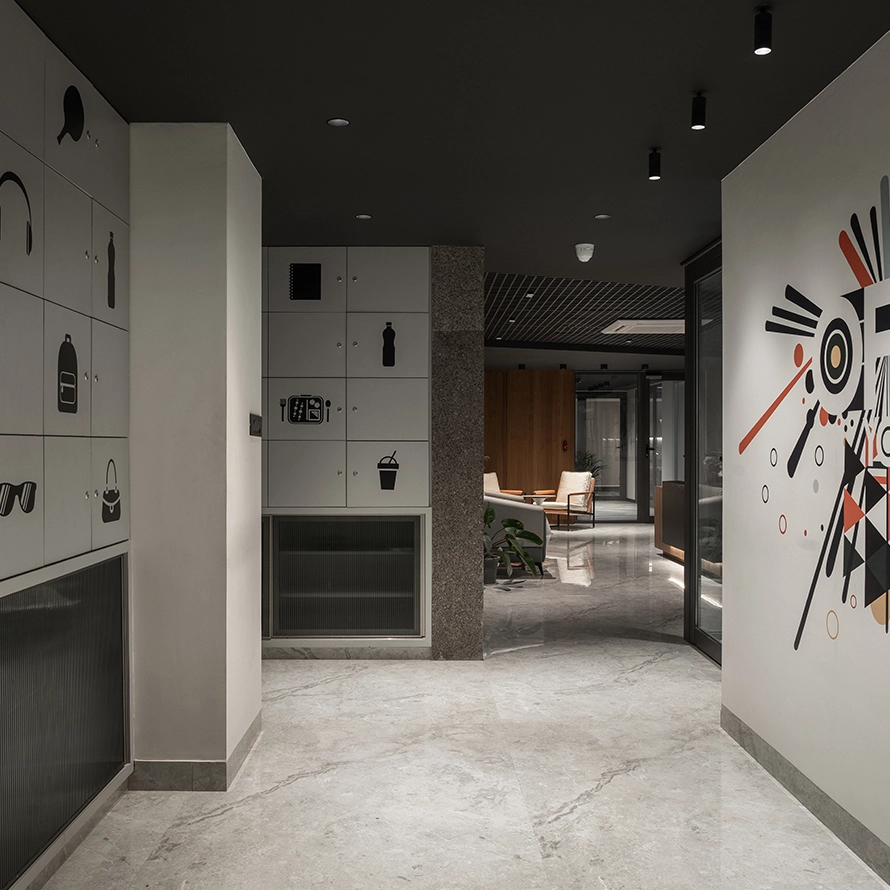
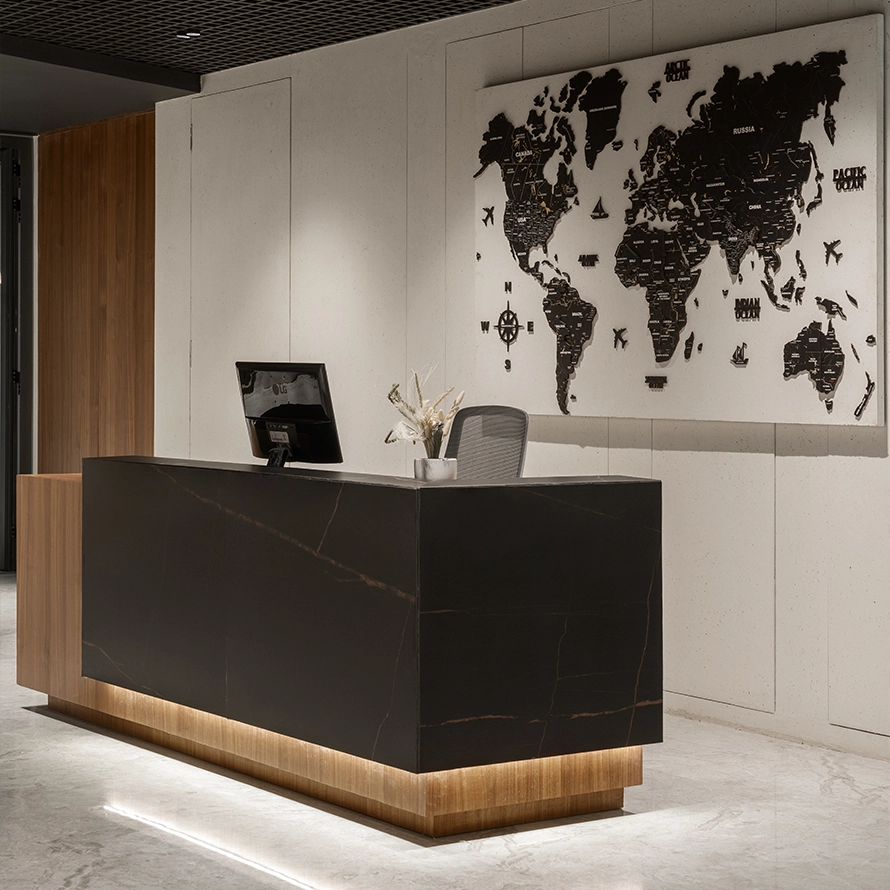
Most corporate receptions for international-parent firms over-perform — polished marble columns, oversized brand walls, lobby theatrics. EDAG’s reception does the opposite. A dark stone-clad floating desk anchors the room without dominating it; a hand-crafted wooden world map carries the global identity without a single logo; a cream-and-leather seating moment turns the wait itself into hospitality. The materials are premium — marble flooring, fair-faced concrete, warm timber, an open grid ceiling overhead — but the composition stays restrained.
The result: visiting German leadership read the space as quietly correct rather than aspirationally branded. The hospitality is genuine; the engineering register is implicit; the global reach is shown, not stated.
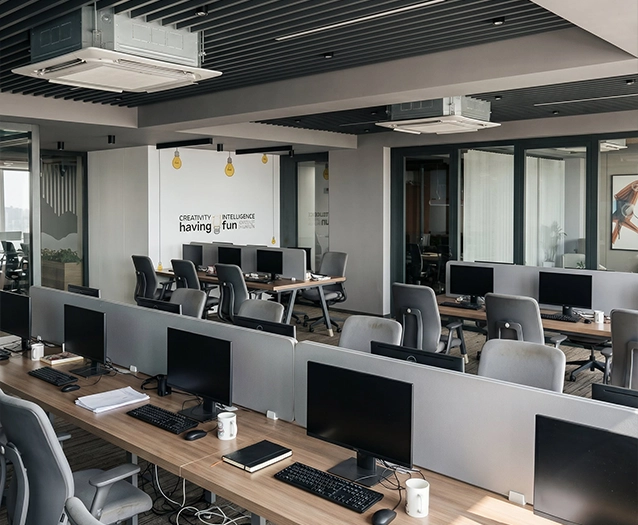
R&D zones structured around engineering workflow.
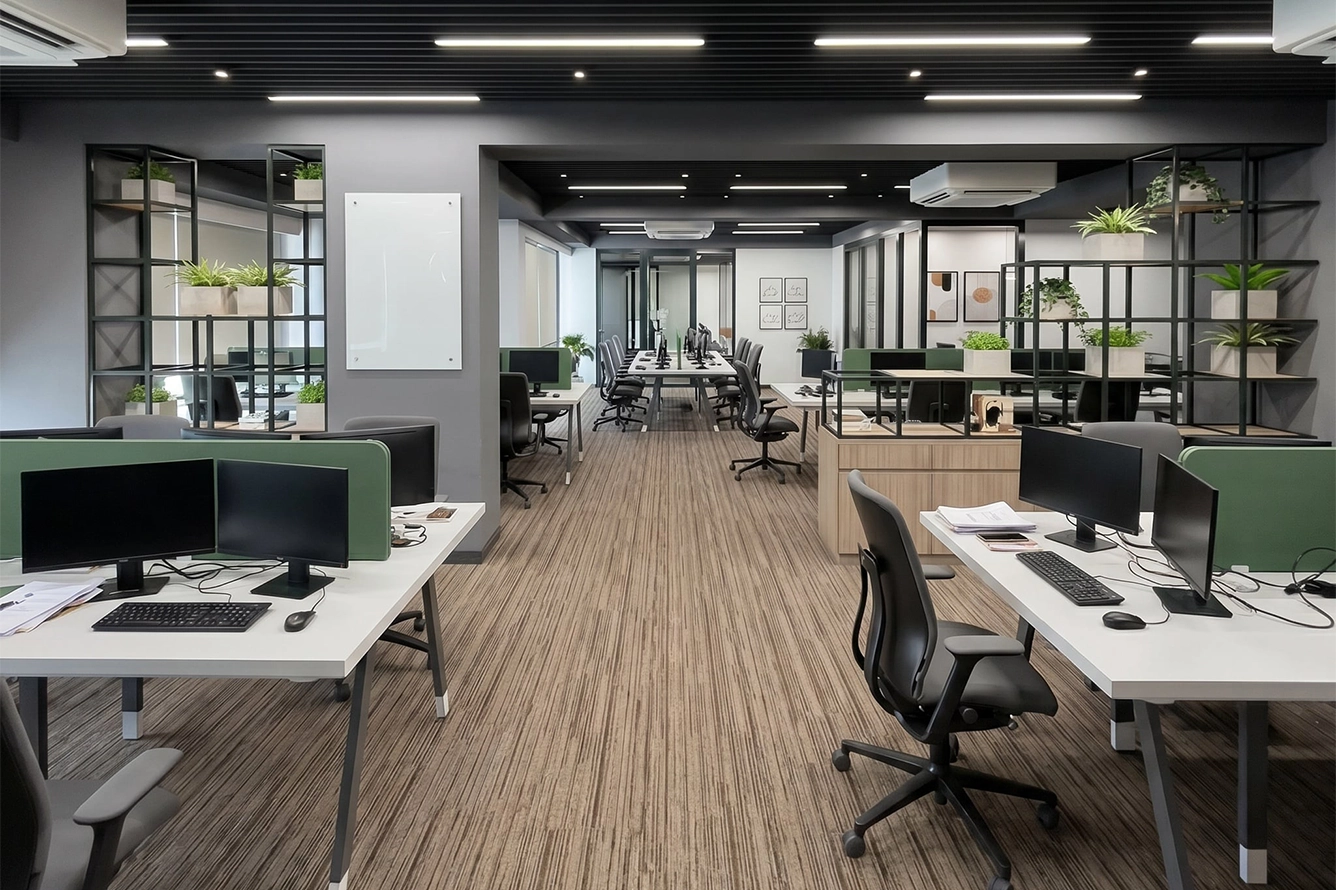
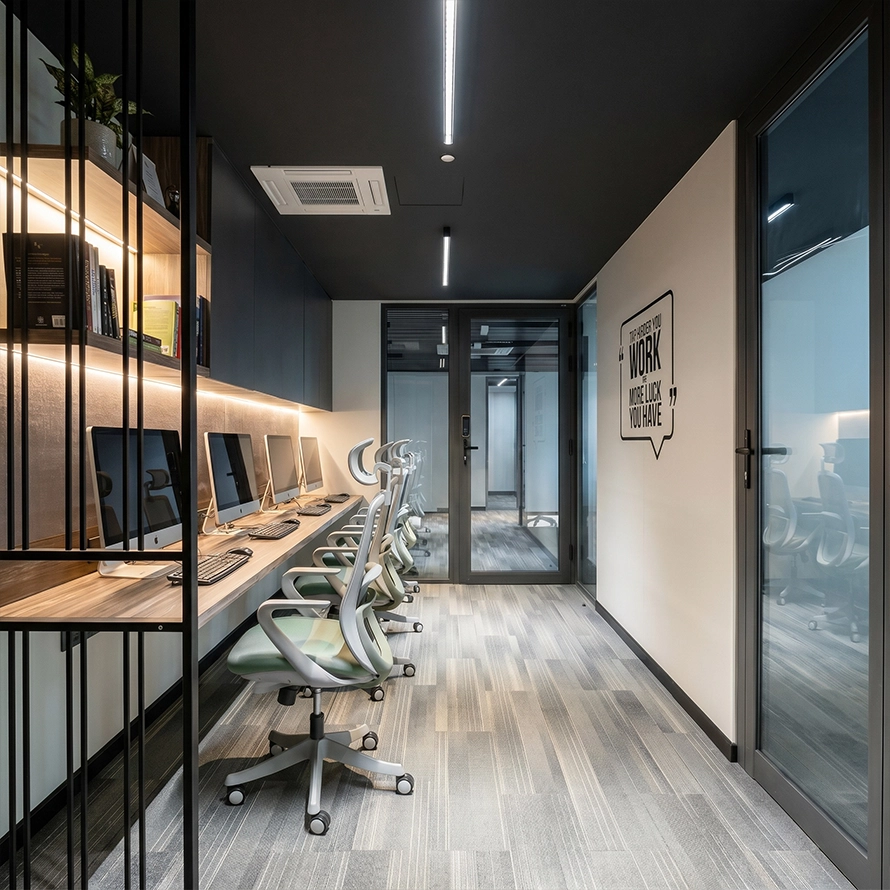
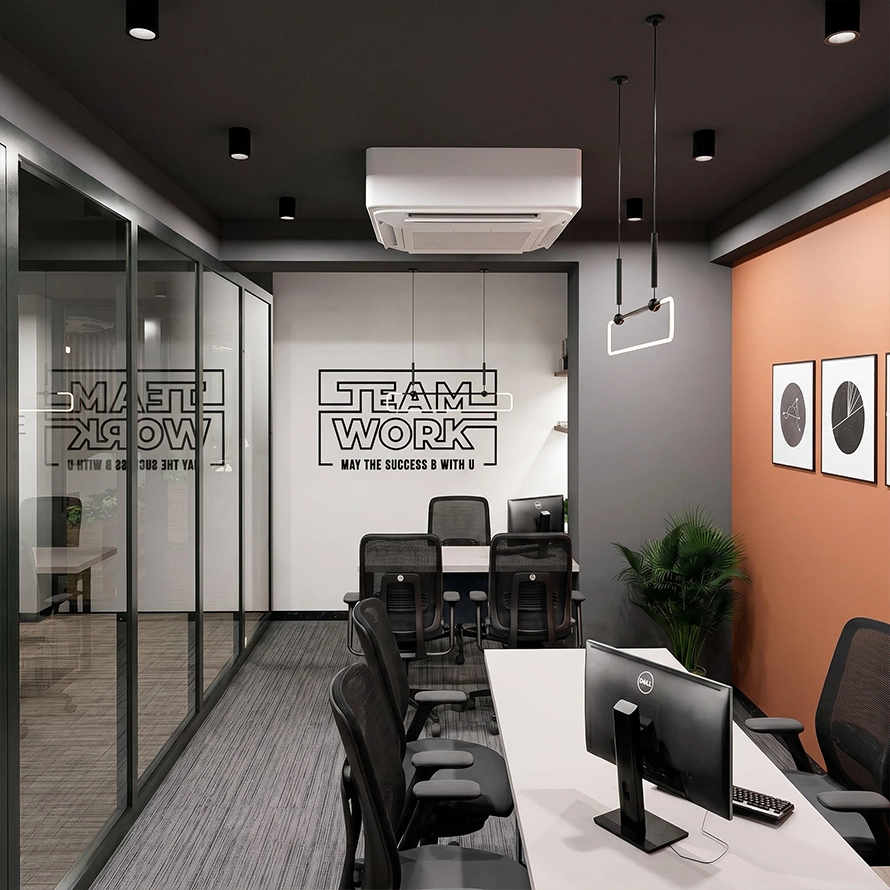
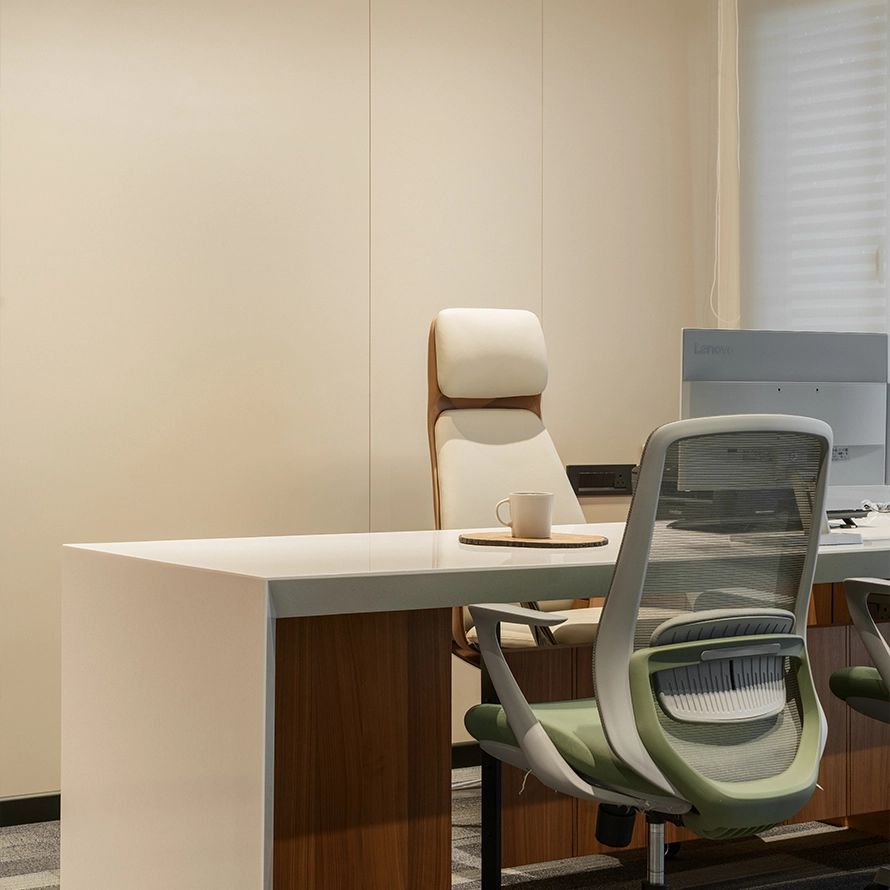
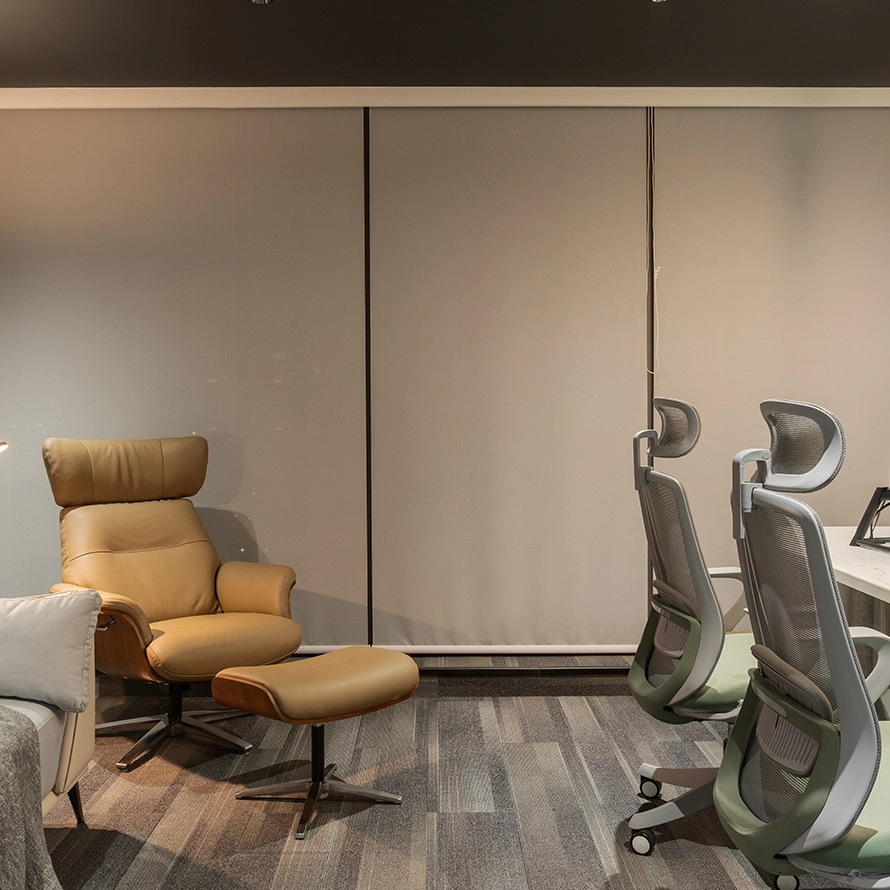
The main R&D floor is laid out as parallel rows of bench-style workstations, oriented to follow how engineering teams actually work — focused individual time with line-of-sight across the floor when collaboration is needed. Open plan with structural punctuation, not open plan with a single mood. Grey acoustic dividers between facing workstations sit at screen height: enough to give each engineer visual quiet at their desk, low enough that the floor stays one connected room when people stand.
Acoustic separation comes from the ceiling above — vertical timber baffles oriented to match the desk rows. The baffles absorb the sound of an active engineering floor and visually reinforce the workstation grid. Engineering acoustics, calibrated to the work — not a generic office tile ceiling pulled from the catalogue.
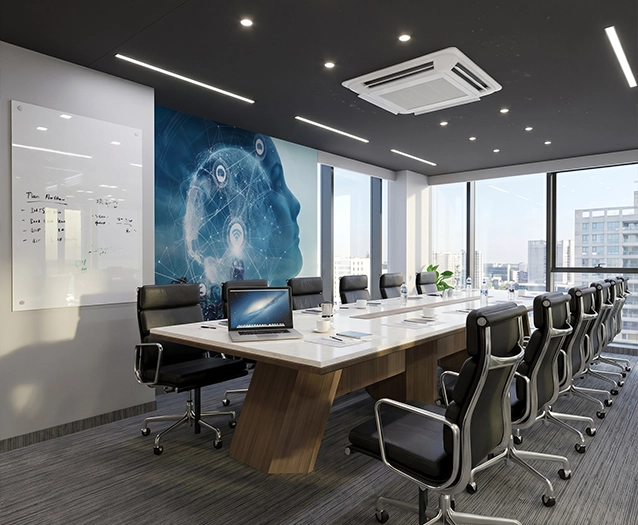
A leadership meeting room that makes the technology argument.
The senior meeting room is where EDAG’s positioning gets stated out loud. A long timber-based table seats twelve to fourteen, ringed by black leather executive chairs that signal corporate-international register without performing it. Behind the head of the table, a large mural — a stylised digital human face threaded with network connections — places the room squarely in the future of mobility EDAG actually works on: software-defined vehicles, connected systems, AI in engineering.
The reception was restrained. The R&D floor is functional. This room is where the conversation about what EDAG does gets the visual weight it deserves. Floor-to-ceiling glazing on two sides keeps the city visible during meetings, anchoring the room in the world it serves. Each space calibrated for its actual job — not a single mood applied to all.
A breakroom that deliberately breaks the rules.
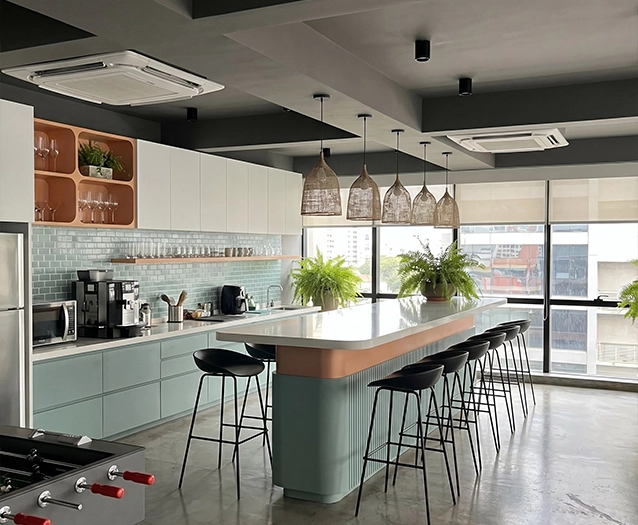
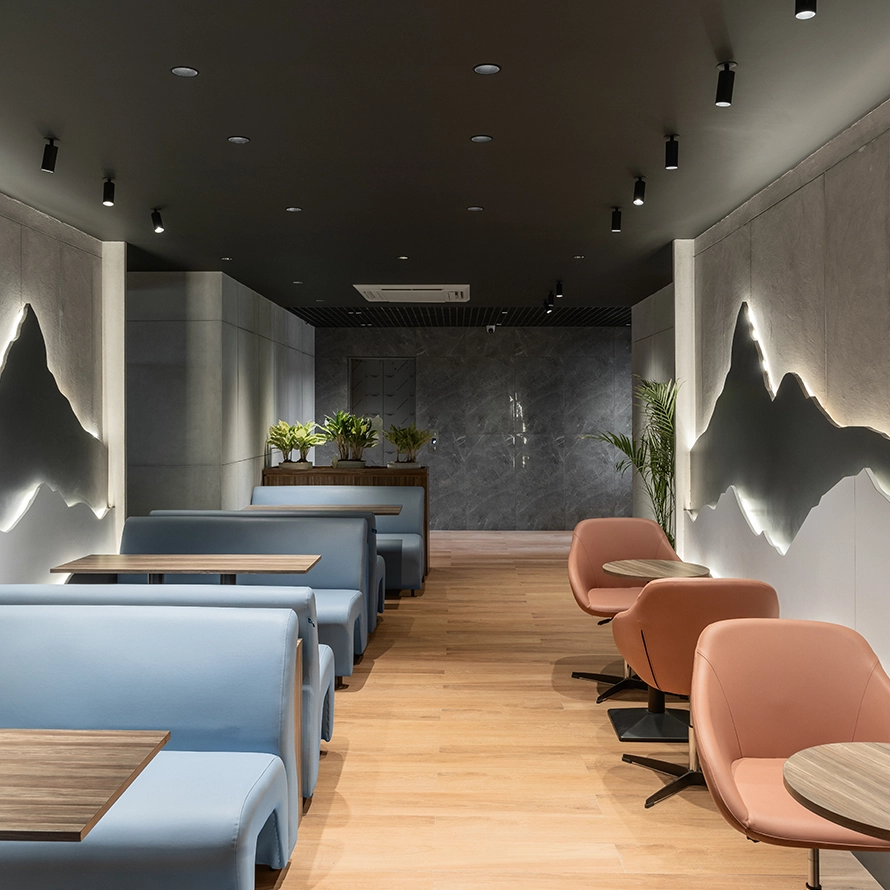
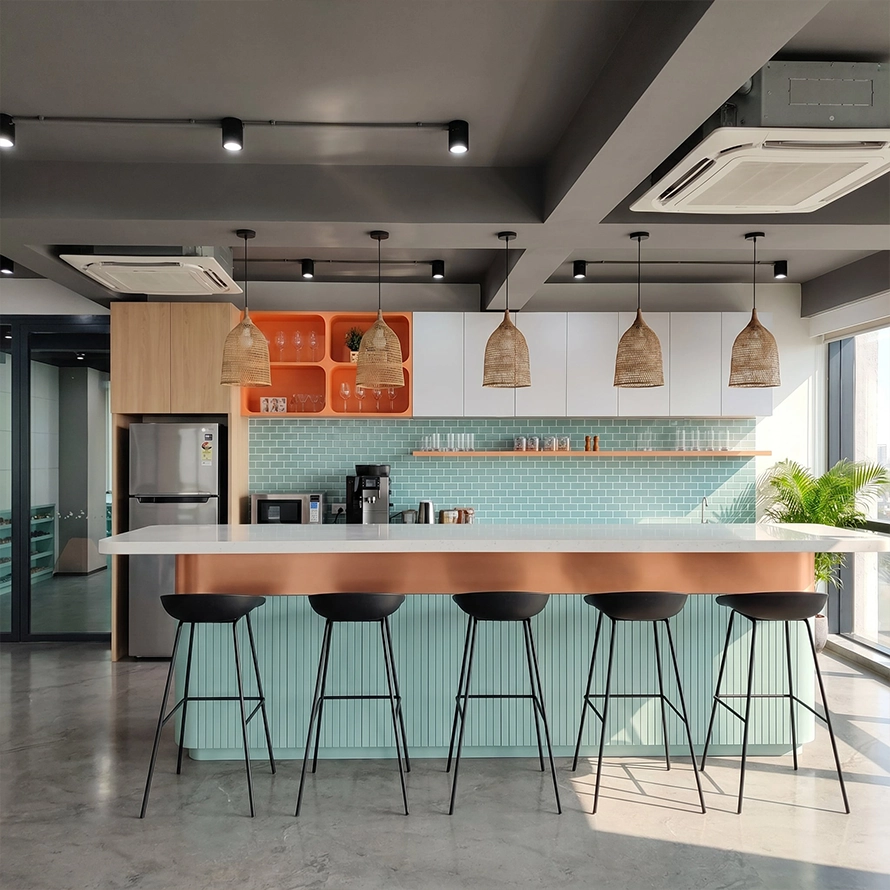
Reception is restrained. The R&D floor is functional. The meeting room is forward-looking. The breakroom is none of those things — and that’s the point. Mint cabinetry, peach detailing, pale aqua tile, rattan pendants, polished concrete underfoot, a foosball table parked in the corner. The materials and colours that would feel chaotic anywhere else in the office feel exactly right here — because this space has a different job.
Engineers don’t want their coffee break to look like their workstation. The breakroom is calibrated to be the inverse of the work floors: lighter, brighter, generous with materials, generous with views. Same discipline driving the design — what does this space need to do? — applied to a question with a different answer.
Leadership cabins built for the people who use them.
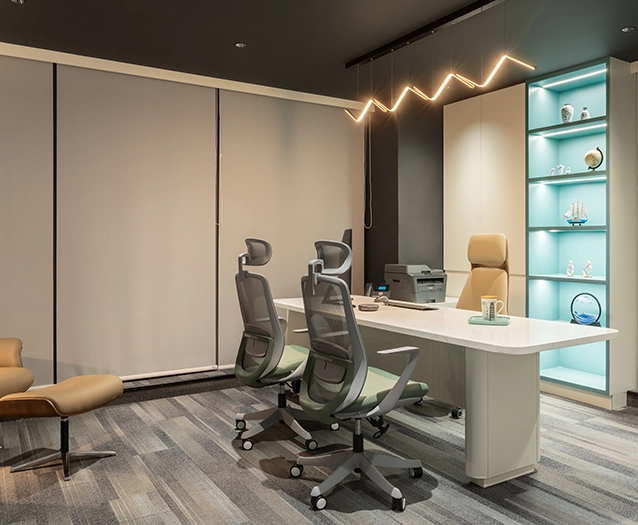
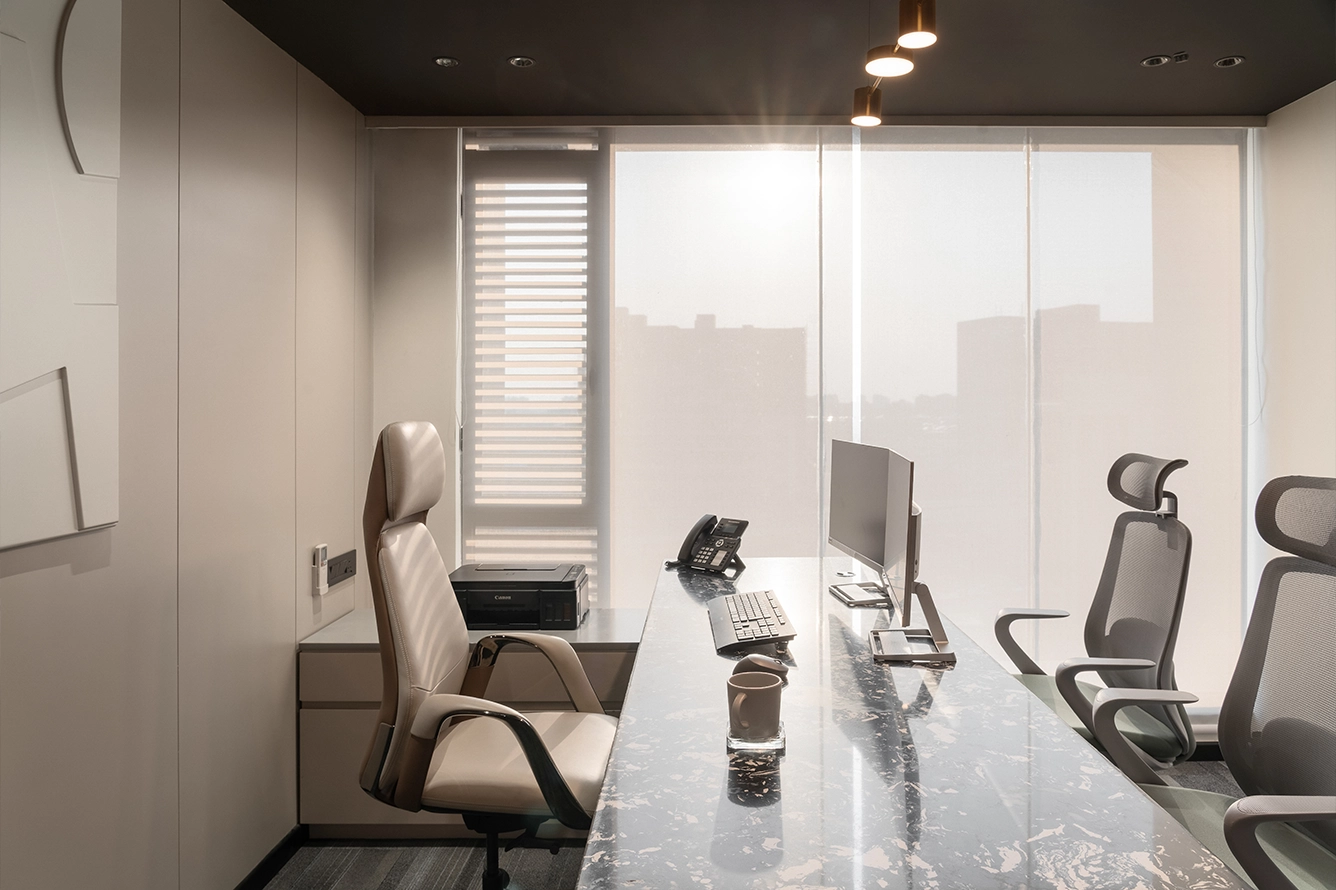
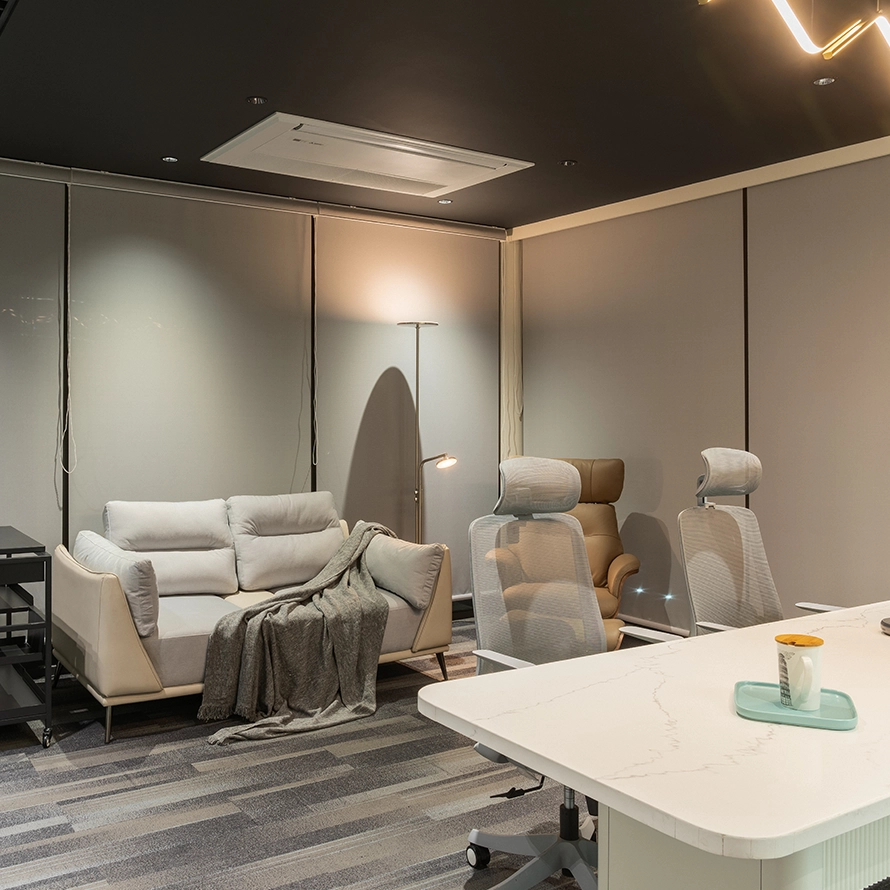
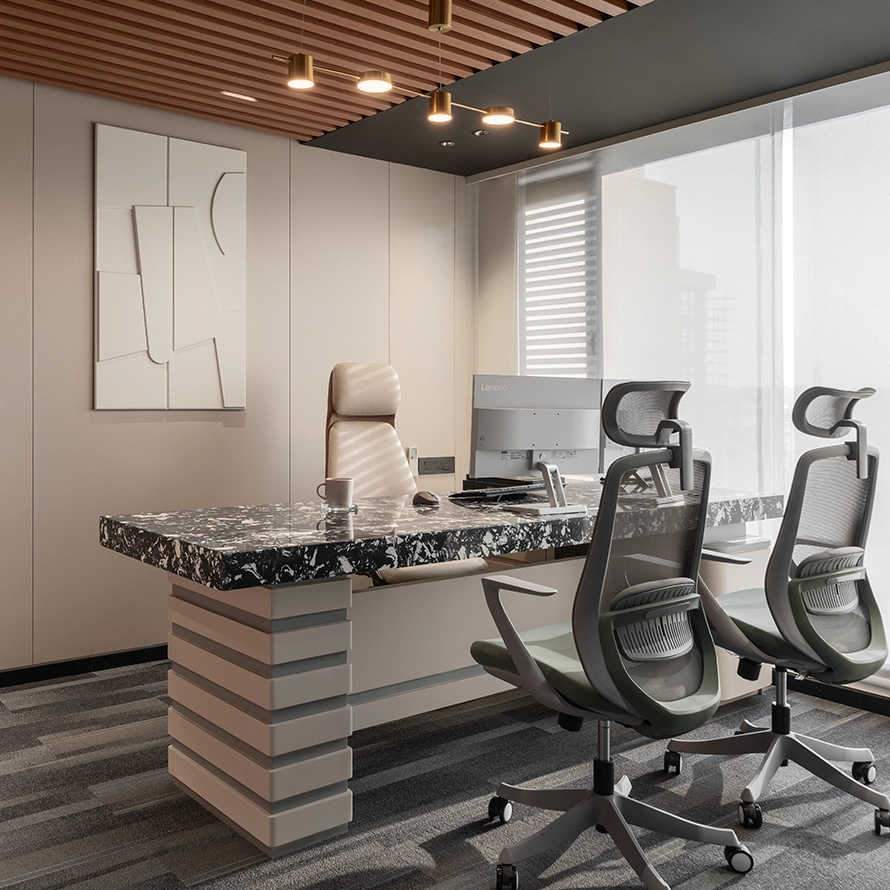
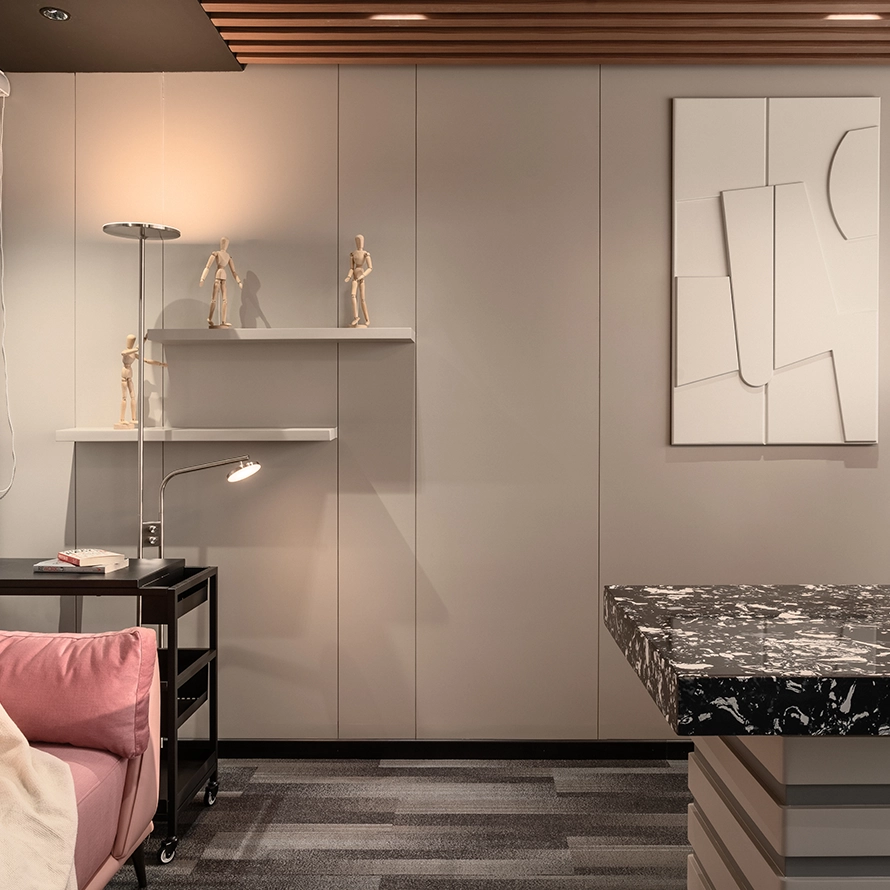
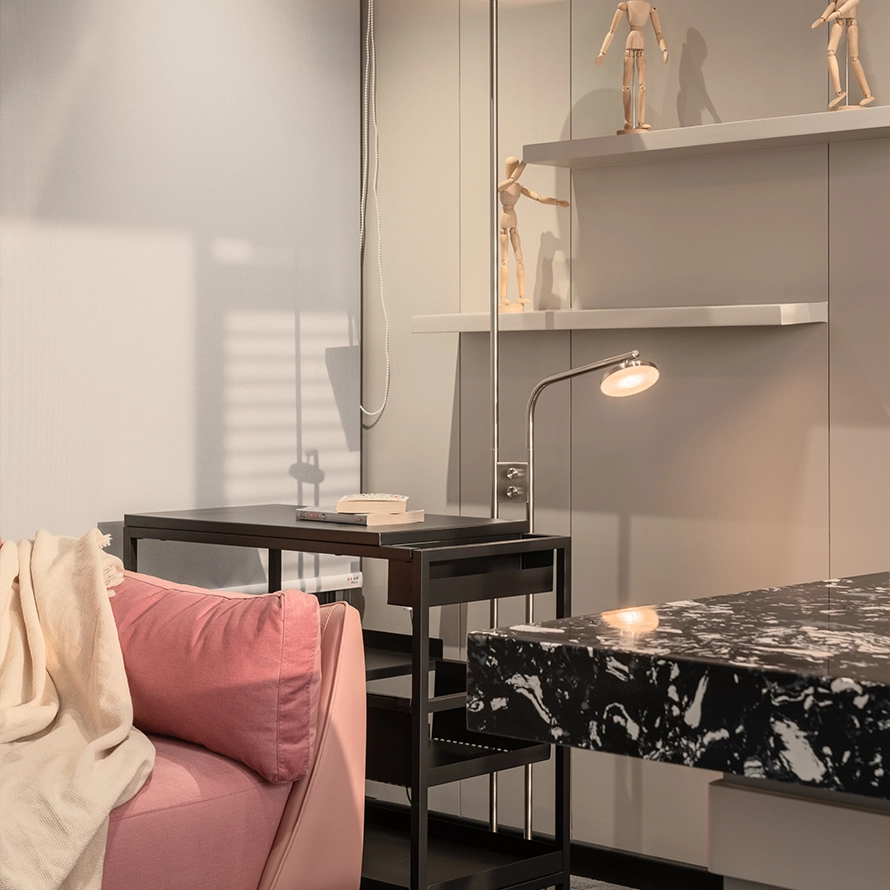
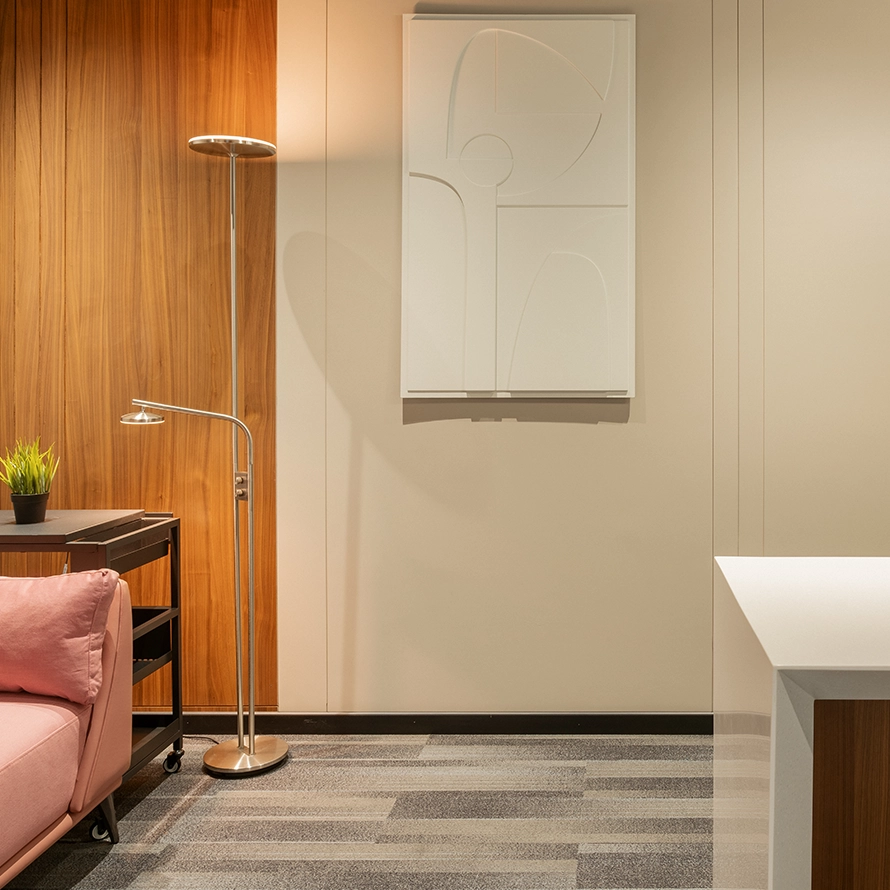
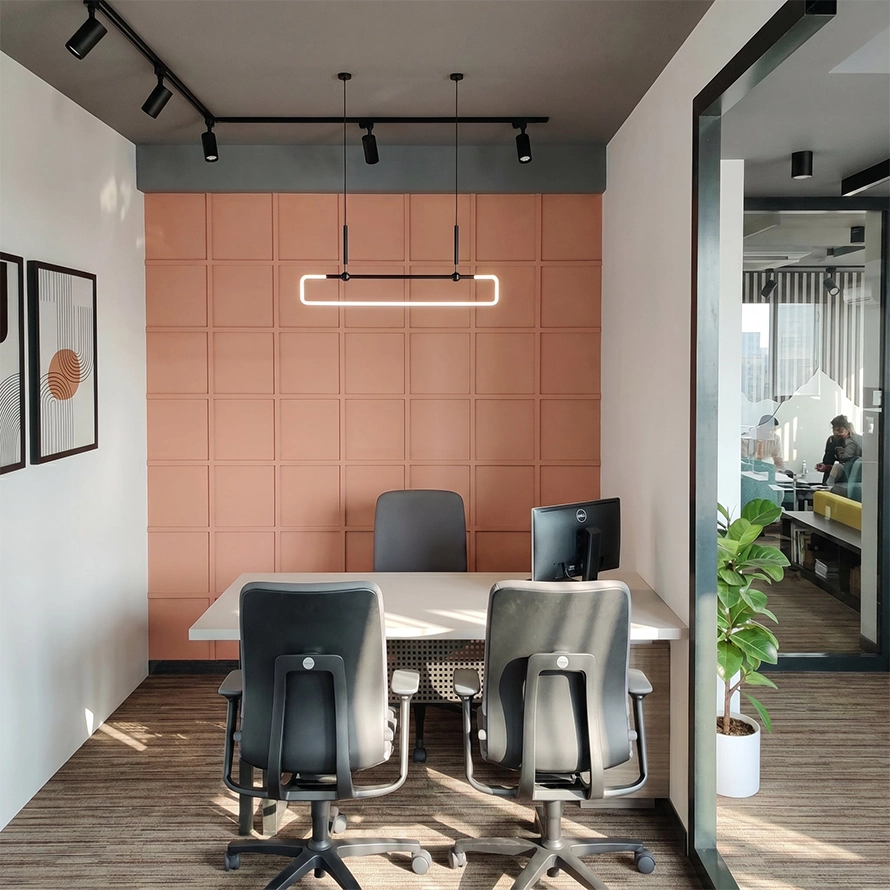
The MD cabin solves a problem most senior offices don’t acknowledge: a space that has to be a workplace and a hosting room and a thinking spot, all in one. A clean quartz-topped desk for daily work. Two visitor chairs across — close enough for conversation, not so close it feels like a meeting. A leather lounge chair in the corner for the work that isn’t desk work. A backlit niche for the small personal objects that mark whose office this actually is.
The zigzag light overhead is deliberately playful; the aqua niche makes a senior office feel inhabited. Calibrated for the person, not the title. Same discipline as the rest of the floor — what does this space need to do? — answered for an audience of one.
Walking through.
Project Gallery · The Complete Walkthrough
What landed, in operation.
The space has been in operation since handover date — month and year. Specific operational outcome — German leadership visit experience, team headcount growth supported, specific workflow improvement observed, client retention or new business secured through the space’s role.
From an APXWorks methodology perspective: the brief asked for a workspace that read as international engineering competence while supporting daily R&D — both were achieved. The four-element material palette has held without amendment. The R&D zone organisation has accommodated team growth or workflow change since handover without spatial restructuring. The discipline embedded in the Design phase continues to do work years on.