
Algo Fluid Systems
What Algo asked for.
Algo Fluid Systems is a globally-recognised pump and fluid-systems manufacturer, exporting across more than forty countries and expanding rapidly. The brand sells engineering credibility — ISO certifications, international stock hubs, a “connecting technologies” promise that customers across continents have already bought into.
The ask was specific. A corporate HQ adjacent to the manufacturing plant in Chhatral, Gujarat — one that holds visitor confidence on arrival, supports the routine work of the headquarters team, and accommodates plant employees who use the building daily. Plus an experience centre that demonstrates the product range to the kind of standard a buyer from Nairobi or Valencia would expect.
The constraints were honest. A tight four-month delivery window, a working brand identity to align with, and a building that had to function as office and exhibition space simultaneously.
What we found, when we looked carefully.
The office serves two audiences at once that the brief hadn’t separated — international buyers walking the experience centre on visit days, and plant-side employees using the same building for routine work. The same space had to read as international showroom to the first audience and as functional headquarters to the second, without either one feeling like the other’s afterthought.
Cross-department communication was the operational pain point, not the brief. Production problems were getting stuck because departments couldn’t see each other or each other’s work clearly enough. The design problem wasn’t “design pretty cubicles” — it was structure the floor so the right conversations happen on the way to the coffee machine, while individual focus still holds.
Vastu was a real client priority, not a bolt-on. The Decode reading surfaced this early and the entire floor plan was developed inside vastu principles from day one — orientations, room positions, entry sequences — rather than retrofitted at the end. The result reads as a deliberate composition; nothing about the layout looks accommodated or compromised.
Five decisions that shaped the project.
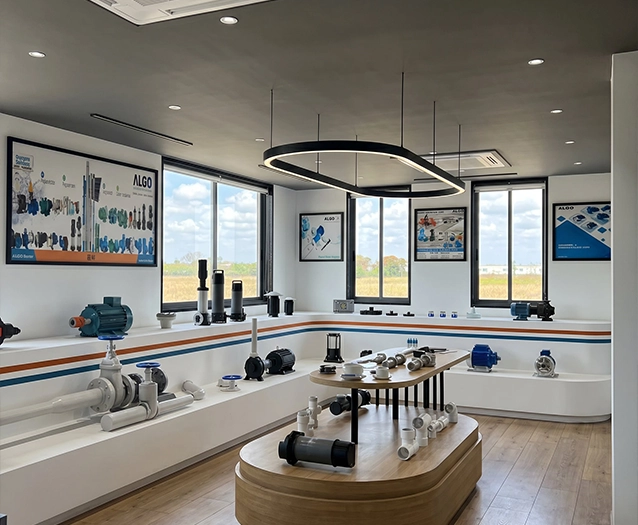
An experience centre that brings the international showroom home.
The product display room is the building’s argument out loud. Pumps, motors, valves and pipe assemblies arranged on a curved L-shaped display plinth, banded in Algo’s signature orange and blue brand stripe, with the central oval timber demonstration table where conversations actually happen.
Floor-to-ceiling glazing on two sides, a warm timber floor, an oval pendant overhead — the room reads as a global trade-fair booth that doesn’t have to travel. Buyers from any country who’ve seen Algo at exhibitions abroad walk in and recognise the register immediately.
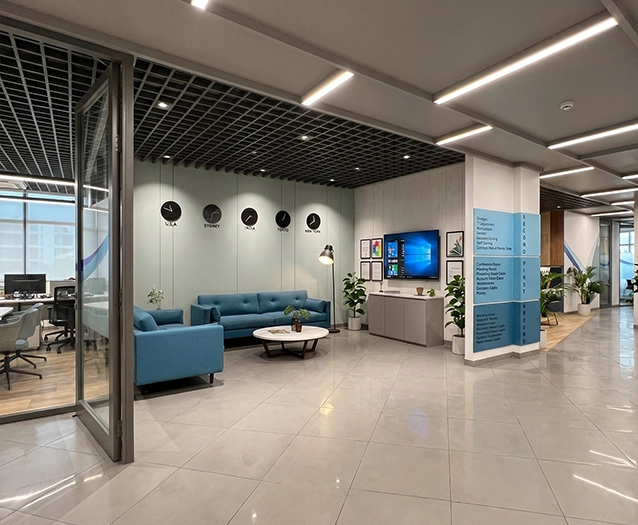
A visitor lobby that makes "40 countries" visible.
The brief said “good presence when visitors arrive.” The Decode reading sharpened that to: make the global reach legible the moment someone walks in. Five wall clocks — USA, Sydney, India, Tokyo, New York — set against a sea-green panel above the hospitality sofa. A vertical signage column maps the building floor-by-floor.
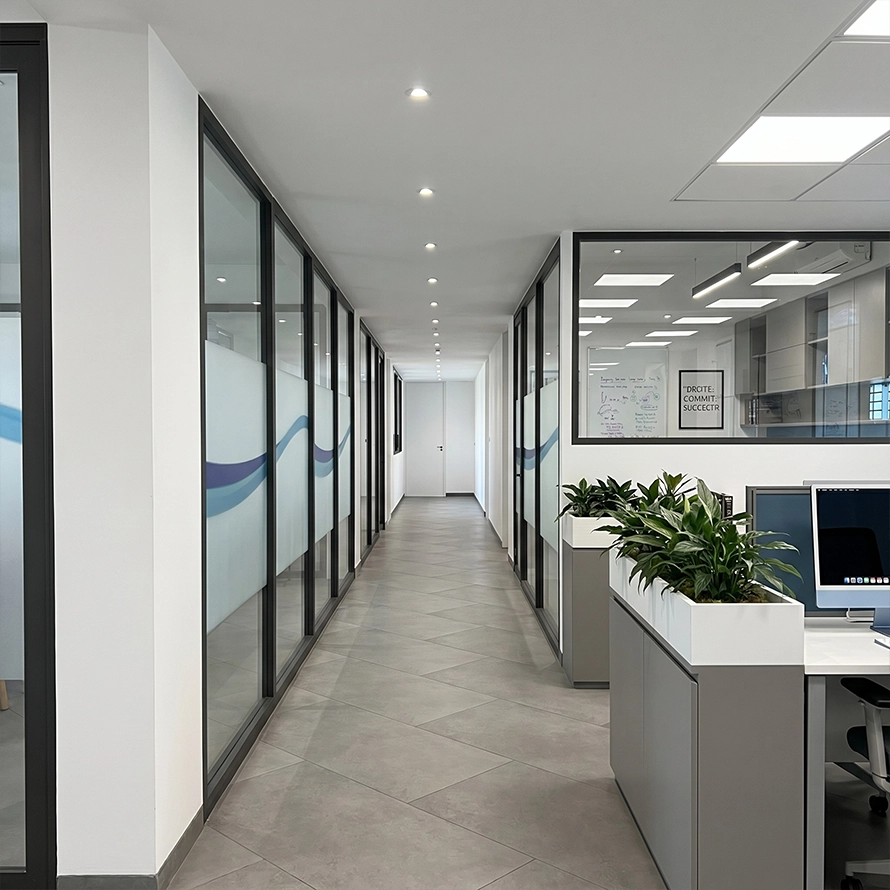
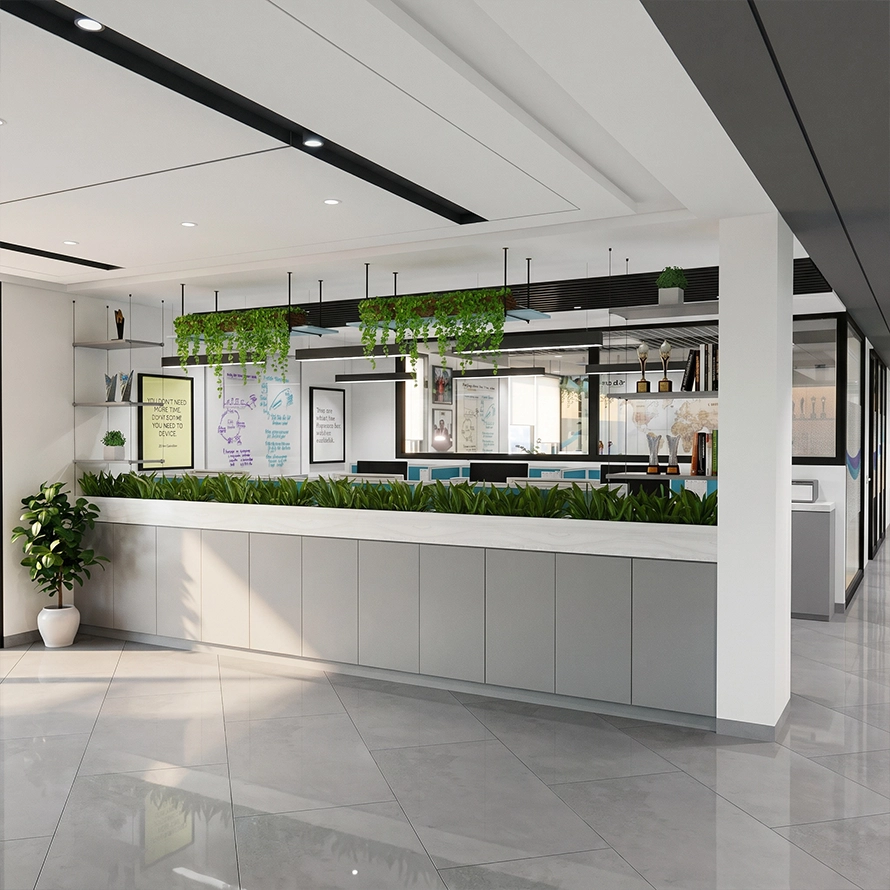
The room photographs as international corporate headquarters, not industrial back-office. Open ceiling grid, large-format marble tile underfoot, a glimpse into working zones through the glazed wall — the lobby tells you what Algo is and what’s happening behind it, simultaneously.
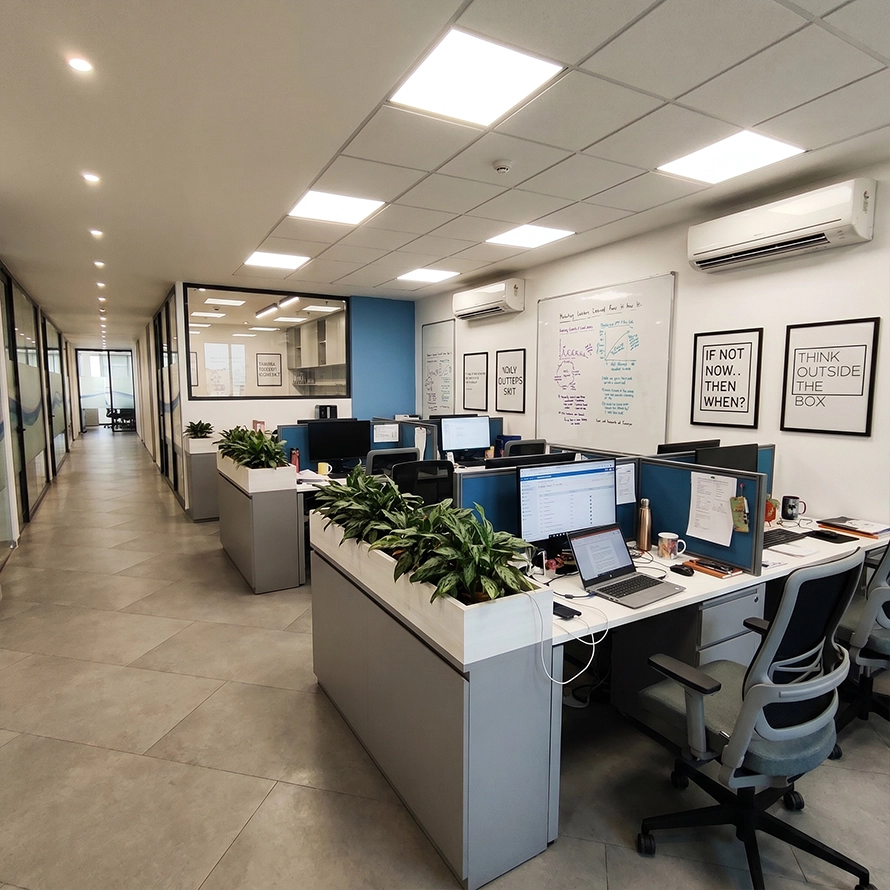
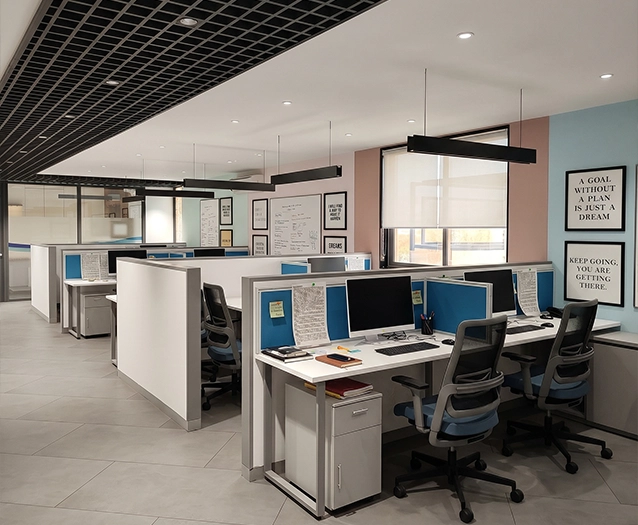
Open workstations, structured for cross-department flow.
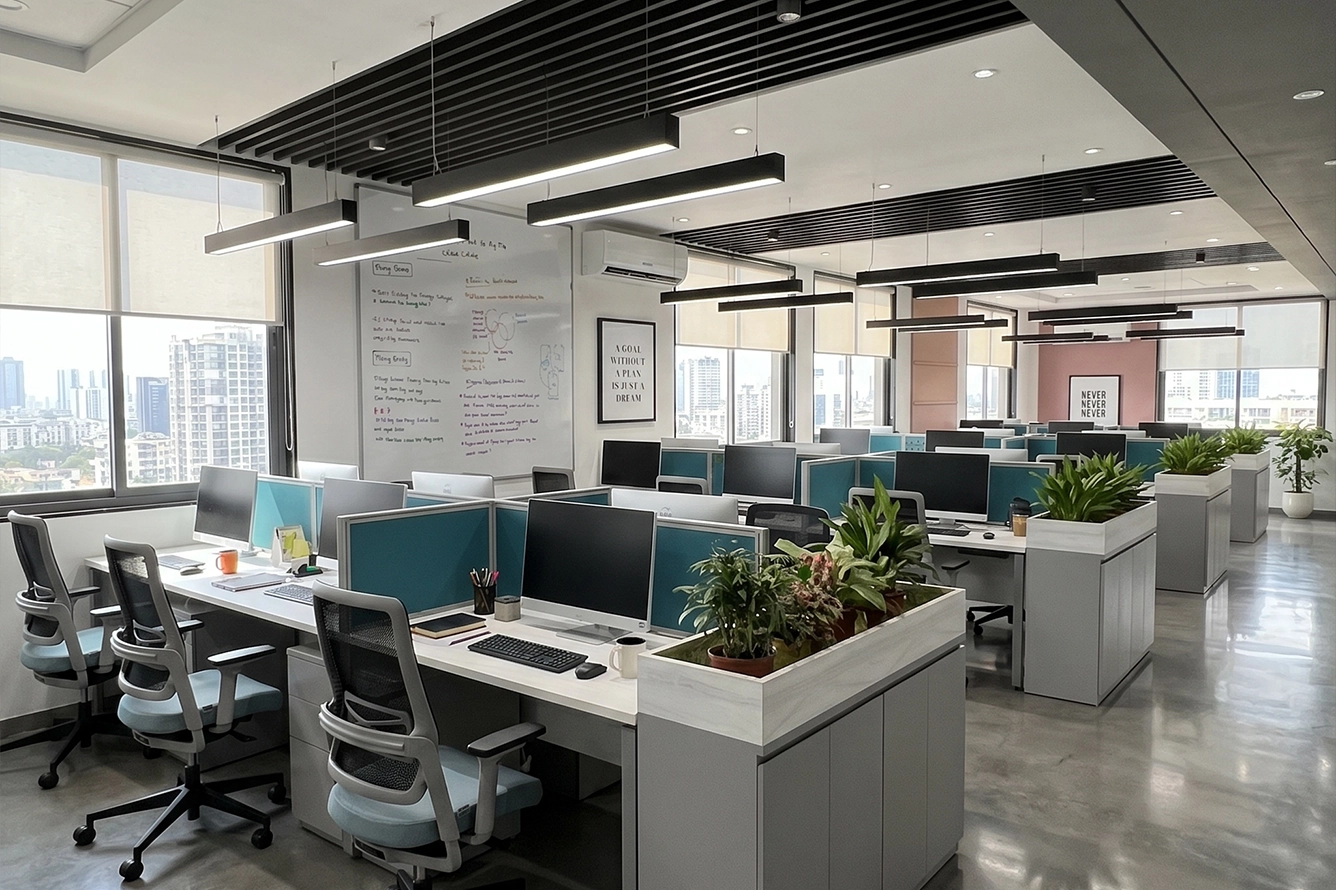
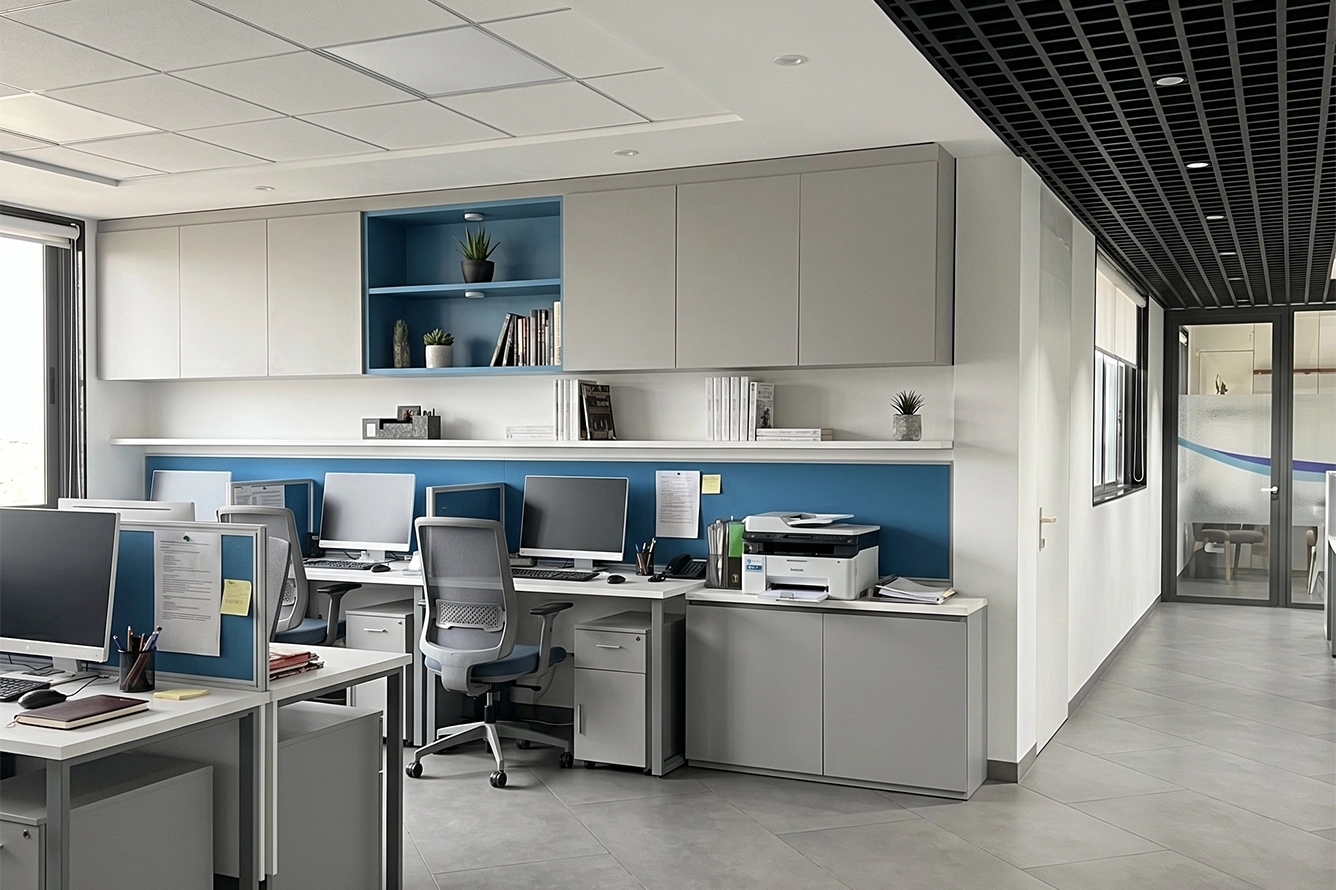
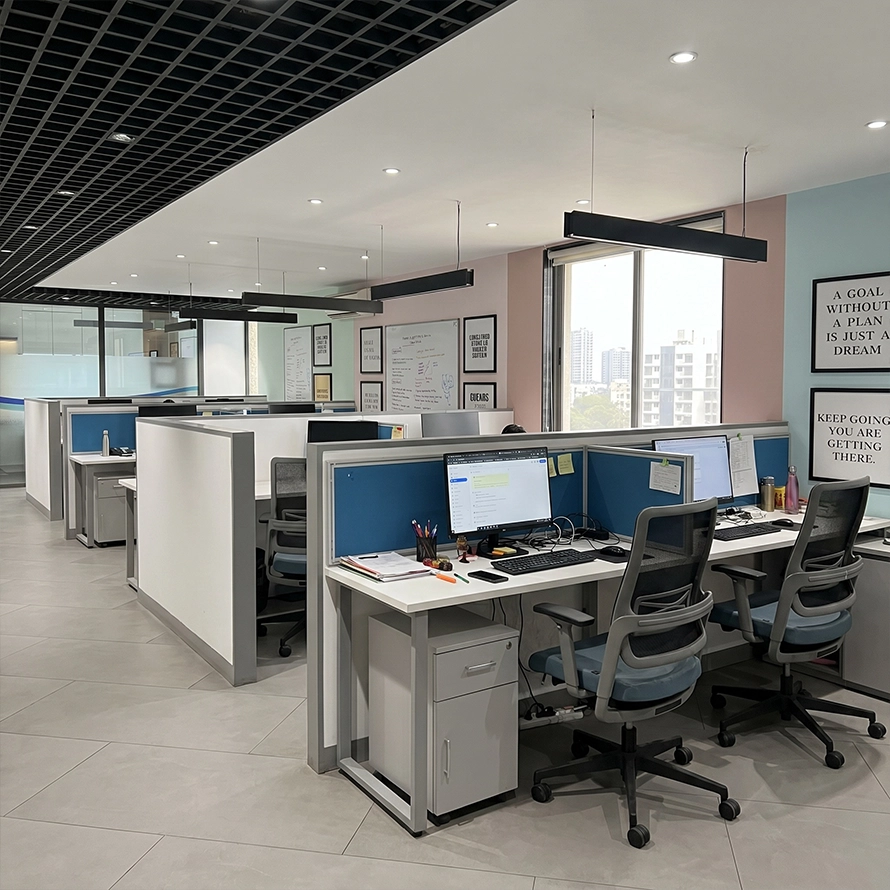
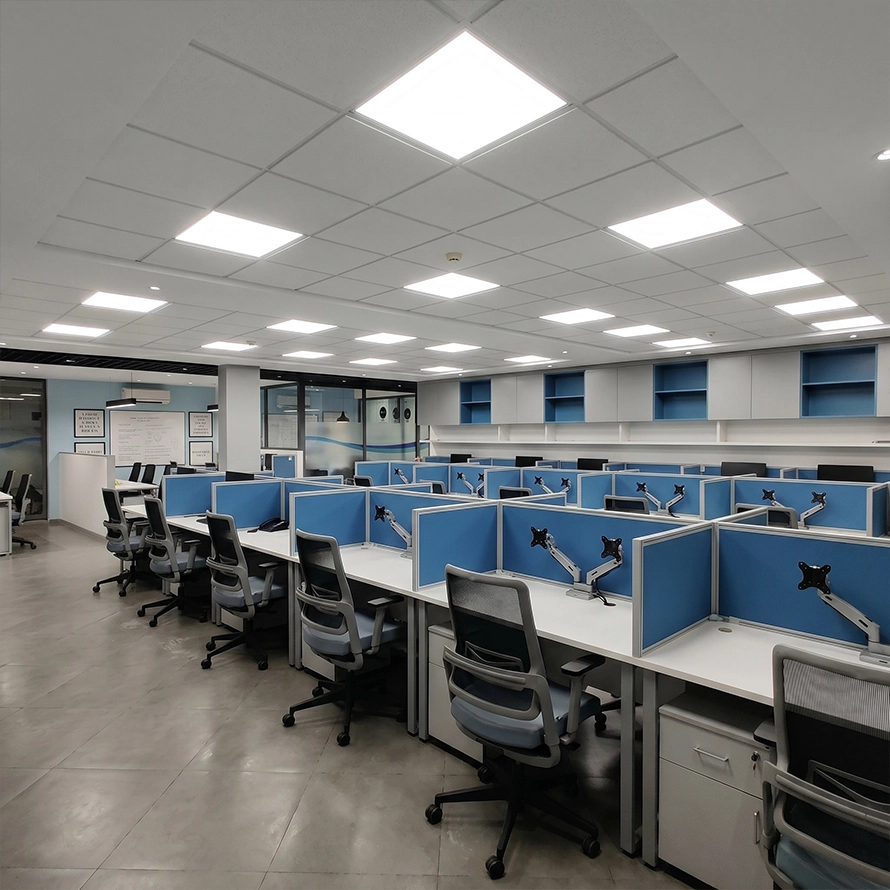
The workstations are open — but the openness is calibrated. Mid-height blue acoustic dividers between facing desks give each engineer visual quiet for focused work. Lower planted shelving units act as biophilic separators between team clusters, allowing line-of-sight when someone stands up. Departments can see each other without walking into each other.
Specification followed the maintenance reality of a plant-adjacent office: vinyl tile floors, washable acoustic panels, replaceable carpet tiles where it mattered — chosen so the office still reads as the office three years on, without scheduled refurbishment.
A boardroom calibrated for leadership thinking.
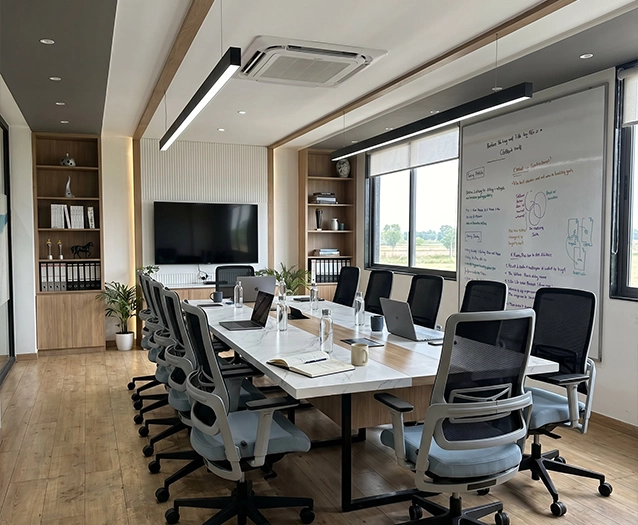
The conference room sits as a quieter counterpoint to the rest of the floor. A long white quartz-topped table, mesh-back chairs in pale blue, a built-in library wall with books and curated objects, a glass writing-wall already populated with strategy notes. Warm timber floor; a single linear pendant overhead.
The room is doing one specific job — the work of deciding what to do next — and the design protects that job from interruption. No dramatic pendants, no statement walls, no theatre. Visitors who get to this room are past the showcase and into the work
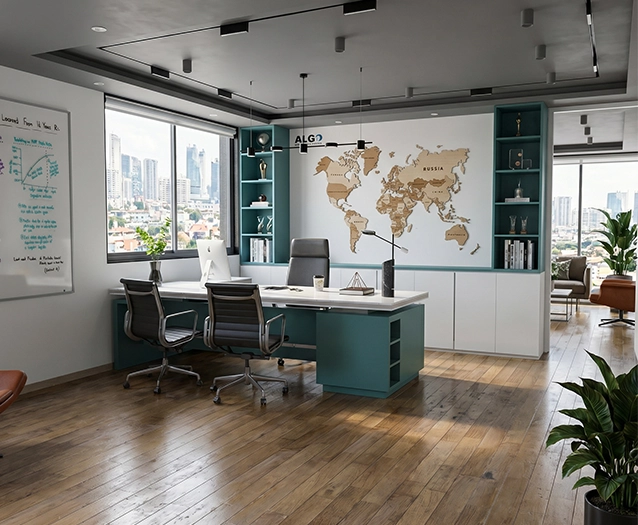
Director's cabin with global identity built into the joinery.
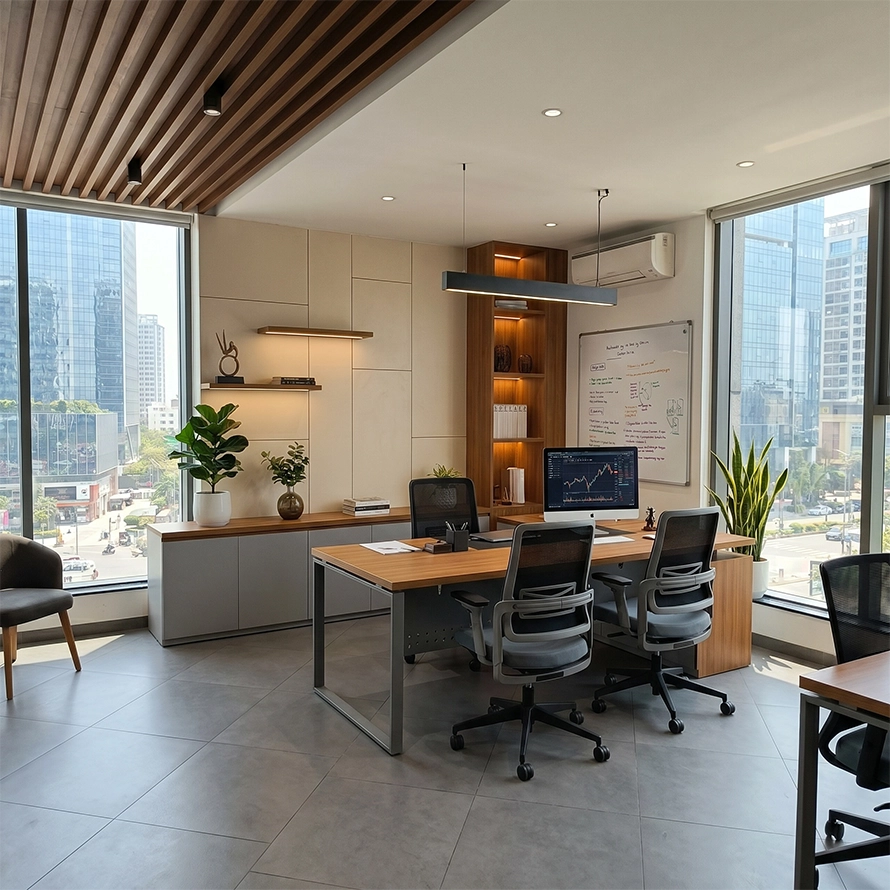
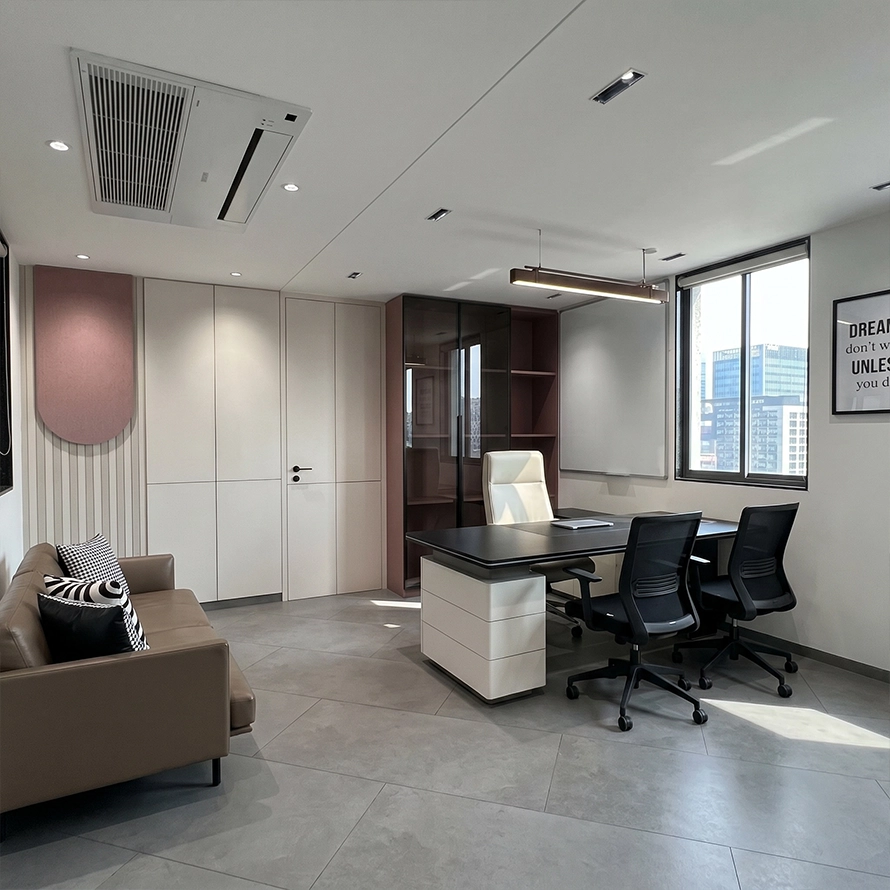
The Director’s cabin closes the argument the lobby opened. A wooden world map mounted above the desk, flanked by teal joinery with curated trophies, books and personal objects. A two-seater desk on a teal plinth for visitor conversations. A leather lounge chair in the corner for thinking that isn’t desk work.
Full-height glazing on two sides places the room above the city — the global map and the live skyline holding each other in view. Calibrated for one person, for daily working, with the company’s reach quietly present in the joinery whenever they look up.
Walking through.
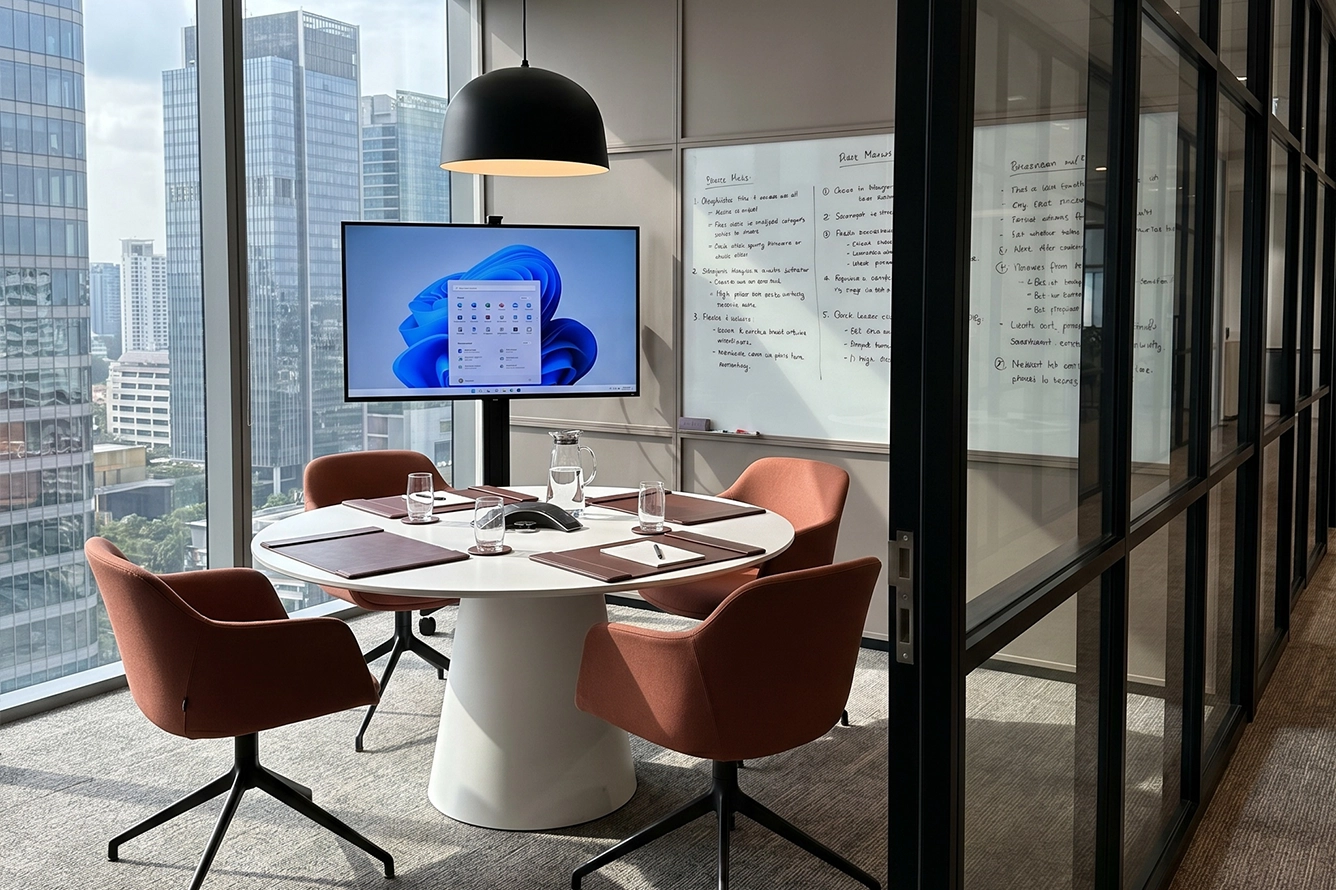
Project Gallery · The Complete Walkthrough
What landed, in operation.
The office has been in operation since 2025. Employees report the floor felt positive on day one — not in a soft “everyone likes the new office” way, but in the specific sense that people who hadn’t been talking started talking. The production problems that had been getting stuck because departments couldn’t see each other began moving again, often within weeks of move-in.
The directors got something the previous office hadn’t given them: visibility. The smart space planning means leadership can read the state of the floor without staging a walk-through, and routine decisions get made on the way past someone’s workstation rather than scheduled into a meeting room.
From an APXWorks methodology perspective: the brief asked for “an office that supports the brand” — the Decode reading reframed it as “an office that lets the work flow.” Both were delivered. The experience centre still photographs as international trade-show standard. The plant-adjacent reality still works as a building people use every day.